

Joanna Horton McPherson has sat across from women who have built companies from nothing, testified before government bodies, co-authored international policy, and led organizations that changed lives at scale. Women who, by every external measure, had already won. And almost every single one of them said some version of the same thing: I don’t know how to explain what I do.

“Most accomplished people do not have a confidence problem,” says Joanna Horton McPherson, creator of the True Influence Method™ and one of the most sought-after private advisors in executive leadership communication. “They have a clarity problem. Once people have language for what they know and what they stand for, confidence tends to follow.”
It sounds like a simple distinction. In practice, it changes everything.
The Gap Nobody Names
Joanna has been circling this truth for most of her adult life — first as a performer, then as an educator, then as an executive strategist, and now as the private advisor trusted by some of the most accomplished leaders in business, media, and public service.
She started speaking at thirteen as part of a touring education company performing in school assemblies. By twenty, she had launched her first business. By twenty-one, her first non-profit. Theatre gave her something formal education rarely does: direct access to authentic expression, and the tools to use it in front of a room.
But it was her own internal journey — and later, her time studying at Harvard under education theorist Eleanor Duckworth — that gave her the framework to understand why so many high-achieving women hit the same invisible wall.
“As an adult, I found validation through my accomplishments rather than through my authentic self,” she reflects. “That gap — between outward success and internal truth — I found it everywhere. And it’s not a personal issue. It’s a leadership issue.”
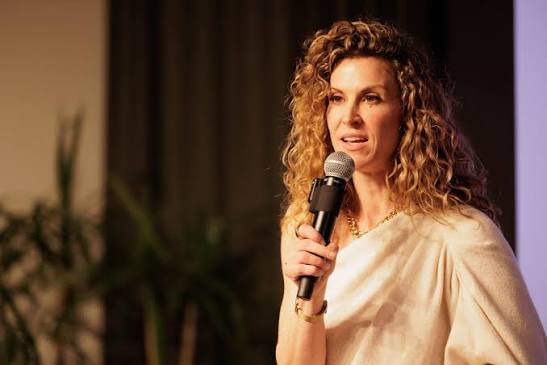
The Confidence Myth and the Women It Has Failed
For decades, the prescribed solution for women who struggled to step into visibility was simple: be more confident. Speak up more, take up more space, own the room.
The advice wasn’t wrong, exactly. It was just aimed at the symptom instead of the cause. What Joanna kept seeing — in boardrooms, in retreat spaces, in private advisory sessions — was something far more specific. High-achieving women weren’t shrinking because they doubted their worth. They were shrinking because they didn’t yet have the language to make their worth legible to others. The expertise was real, the authority was earned, but the message was missing.
“Performative leadership affects not just ourselves but those we lead — our teams, our businesses, our families and communities,” she says. “When you don’t name the truth, those you lead won’t either.”
This is the clarity problem. And it is, she argues, one of the most underdiagnosed leadership crises of our time — particularly for women who have spent years proving themselves through achievement rather than articulation.
Deborah Rugg spent decades at the highest levels of global public service — including co-authoring the UN Sustainable Development Goals — before approaching retirement and finding herself unable to distill a singular voice from a lifetime of extraordinary work. The accomplishments were undeniable. The message was scattered.
“Working with Joanna McPherson has been nothing short of life-changing,” Rugg says. “Her skill, patience and intuition make her truly rare and exceptional.”
Through structured inquiry, Deborah found the throughline connecting everything she had built — and turned it into a focused public talk grounded in lived authority. She is now writing her next book, aimed at mentoring young women entering public service.
What the True Influence Method™ Actually Does
The True Influence Method™ is Joanna’s proprietary leadership framework — and it is not a communication course. It is not a media training. It is not a confidence bootcamp. It is, at its core, a process of excavation.
Grounded in neuroscience, educational inquiry, motivational interviewing, and the Sanford Meisner acting technique, the method guides clients through a structured journey from the inside out — uncovering the defining moments, formative beliefs, and lived experiences that constitute their real authority, then building a repeatable, emotionally resonant message from that foundation.
The process moves phase by phase: identifying the story, building the message, framing it into a signature talk or content, and delivering it on stages and in media with what Joanna calls embodied presence rather than performance.
Andrea, a wealth advisor for millionaire entrepreneurs, arrived in early sessions describing herself as “nothing special” — dismissing the idea that her experience held broader meaning. Through sustained inquiry, she connected that self-dismissal to the emotional imprint of watching her parents struggle with money. That reframe transformed her personal history into a coherent theory of wealth grounded in transition, dignity, and identity. Within a year, she had left her VP role, launched a new company, built an active client base, and landed on the TEDx stage.
“In this past year of working with Joanna, I have booked more talks and our business revenue increased by six figures,” says Monica May-Dunn, CEO and Owner of Arizona Escrow and Financial.
The pattern repeats across every client Joanna works with. The issue was never capability. It was always clarity.
When Clarity Replaces Performance, Everything Shifts
What changes when a high-achieving woman finally finds her message isn’t just her LinkedIn bio. It’s the rooms she gets invited into. The stages she commands. The revenue her visibility generates. The teams she leads more effectively because she can now articulate not just what she does but why it matters.
“The key to elevating your leadership isn’t more training or more positioning,” Joanna says. “It’s becoming more true and trusting of who you are.”
That statement lands differently coming from a woman who has served at the board level, trained thousands across multiple countries, built and scaled businesses, and spent two decades inside the highest levels of leadership rooms watching what actually moves people.
Valerie Crafton, CEO of VALC Consulting, put it this way: “Joanna didn’t just help me find my voice — she revealed a story I didn’t know I had.”
That is the work. Not manufacturing a message. Recovering the one that was always there — buried under years of achievement, performance, and the relentless pressure to prove rather than to simply be.
What She’s Building Next
Today, Joanna is channeling her focus toward the intersection of women’s leadership and capital access — leaning into venture capital as a partner and advisor, building spaces where women leaders can grow alongside solutions to the funding gap that so often caps their ambitions.
“I want to help one billion women leaders in my lifetime,” she says without hesitation.
It’s an audacious goal. It’s also a logical one — because Joanna has identified something the leadership development industry keeps getting backwards. The women who will change industries, build legacies, and lead movements are already out there. Already accomplished. Already capable.
They just need someone to finally ask them the right questions.
To learn more about Joanna’s work, visit www.trueinfluencemethod.com

We don’t just report the news, we deliver it through the voices of multiple expert staff writers, each selected to broaden our scope and deepen our storytelling.
