
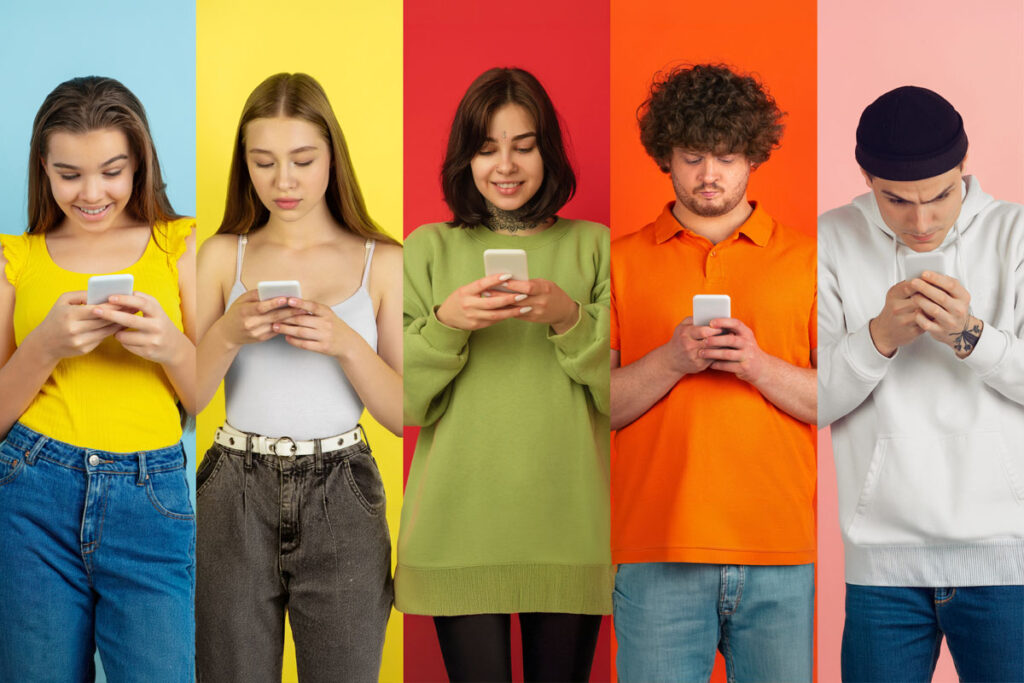
In a city that never sleeps, many New Yorkers are living in a state of constant stimulation. By the time many of them finish their morning commute, they have already checked email, scrolled through social media, responded to messages, listened to a podcast, and ordered coffee from an app. Before the workday has even begun, the brain has been fed a steady stream of stimulation and rewards.

In recent years, dopamine has become one of the most talked-about concepts in wellness culture. Social media influencers promote “dopamine detoxes,” productivity experts share “dopamine hacks,” and countless articles warn about the dangers of chasing the next “dopamine hit.” Yet behind the buzzword lies a larger question: Why do so many of us feel compelled to constantly seek the next source of excitement, validation, distraction, or relief?
Dopamine Goes Mainstream
Dopamine is often described as the brain’s “feel-good” chemical, but research suggests the reality is more complex. Dopamine plays a key role in motivation, learning, reward, and anticipation. Rather than simply producing pleasure, it helps drive the desire to pursue experiences the brain expects to be rewarding.
This distinction helps explain why phrases such as “dopamine hit,” “dopamine detox,” “dopamine fasting,” and “dopamine hacking” have entered everyday conversation. While these terms are rooted in real psychological concepts, experts caution that they often oversimplify how the brain works. There is no scientific evidence that people can literally “detox” from dopamine. Instead, reducing overstimulation may help people recognize habits that have become automatic and regain control over their attention.
The Attention Economy at Work
According to a Washington Post analysis of recent Pew Research data, 45 percent of teens say they spend too much time on social media, while 48 percent believe it has a mostly negative effect on people their age. Yet 74 percent also say it helps them stay connected with friends, highlighting the tension between connection and compulsion. The same report notes that adults spend an average of about 2.4 hours a day on social media, with many users logging more than ten hours online daily when work and entertainment are combined.
The TikTok algorithm, in particular, has been widely studied for its ability to rapidly learn user preferences and deliver highly personalized, endlessly refreshing content. Research tracking user behavior has shown that even light users can quickly escalate their screen time as the algorithm optimizes for attention.
The Many Forms of Reward Seeking
Although social media often receives the most attention, dopamine-seeking behavior extends far beyond our phones. Dating apps capitalize on novelty and validation. Streaming platforms encourage binge-watching through autoplay features and cliffhanger endings. Online shopping combines anticipation with instant convenience. Gambling offers unpredictable rewards that keep people engaged.
Even self-improvement can become part of the cycle. Productivity apps, habit trackers, fitness challenges, cold plunges, energy drinks, and biohacking routines all promise greater performance, achievement, or transformation. While many of these tools can be beneficial, they also tap into the brain’s reward system. Not every dopamine hit comes from entertainment. Sometimes it arrives disguised as self-optimization.
Why We Crave Constant Stimulation
As humans, we are naturally drawn to new experiences, unexpected rewards, and anticipated outcomes that help capture attention and motivate behavior.
Research suggests that anticipation itself may be one of the most powerful drivers of dopamine activity. In many cases, the expectation of a reward can be just as motivating as the reward itself. That helps explain why we repeatedly check our phones, refresh feeds, or return to apps even when the experience is not particularly satisfying.
At the same time, modern technology has made it easier than ever to avoid boredom. Instead of sitting with our thoughts, we can immediately reach for content, entertainment, or distraction. The result is a culture increasingly accustomed to constant stimulation and increasingly uncomfortable without it.
Happiness, Relief, and the Need to Escape
The deeper question may not be why we seek pleasure but why we seek distraction. Many dopamine-driven behaviors occur during moments of stress, loneliness, anxiety, uncertainty, or emotional fatigue. A quick scroll through social media, another episode of a favorite show, or an online purchase can provide temporary relief from uncomfortable feelings.
This does not mean technology is inherently harmful. It offers connection, entertainment, convenience, and information. Researchers continue to debate the relationship between screen time and mental health, with many emphasizing that the quality of digital experiences may matter as much as the quantity.
Consider the familiar habit of opening Instagram or TikTok, scrolling for a few minutes, closing the app, and then reopening it moments later. Most people are not doing this because they expect to discover something life-changing in those thirty seconds. They are responding to a feeling.
That feeling might be boredom while waiting for the subway, anxiety before a meeting, loneliness at the end of the day, or simply a brief lull in stimulation. Over time, the brain learns that opening an app provides an immediate change in mental state. It offers novelty, distraction, and the possibility of something interesting. The reward is not necessarily the content itself. The reward is the feeling of no longer being bored, restless, or uncomfortable.
Still, it is worth asking whether we are pursuing genuine happiness or simply trying to escape discomfort. In a city known for its relentless pace and constant demands, the search for relief may be every bit as powerful as the search for pleasure.
Relearning Satisfaction
The solution is unlikely to involve abandoning technology or avoiding dopamine altogether. Dopamine is essential for motivation, learning, and everyday functioning.
Instead, experts often recommend creating a healthier relationship with stimulation. Activities such as reading, walking, creative hobbies, face-to-face conversations, mindfulness practices, and periods of rest offer rewards that unfold more slowly but often feel more meaningful.
For New Yorkers, that might mean reading on the subway instead of scrolling, taking a walk through Central Park without headphones, or allowing a few minutes of downtime without reaching for a device. These activities may not deliver the instant gratification of a notification or viral video, but they encourage something that has become increasingly rare: sustained attention.
The challenge of modern life may not be avoiding dopamine. It may be learning the difference between stimulation and satisfaction. One is immediate, effortless, and always available. The other often requires patience, presence, and time. As technology continues to compete for our attention, perhaps the real question is not whether we can resist the next dopamine hit, but whether we still know how to find fulfillment beyond it.

We don’t just report the news, we deliver it through the voices of multiple expert staff writers, each selected to broaden our scope and deepen our storytelling.
