
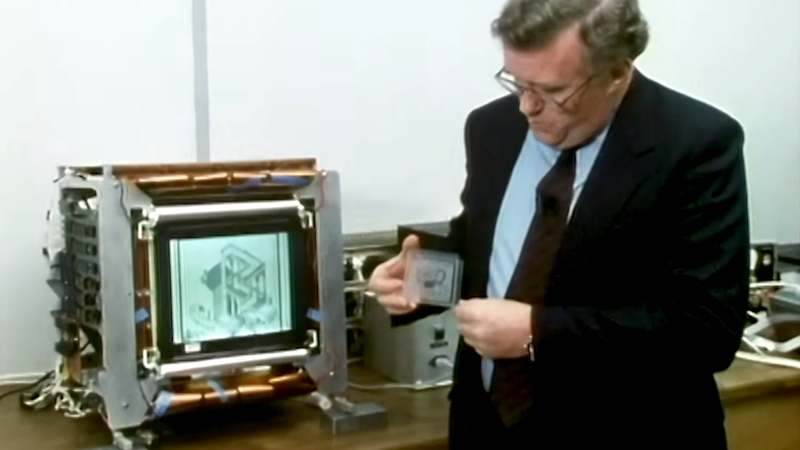
We all know the e-ink persistent displays, as they’re cheap and plentiful enough to have become ubiquitous in applications such as supermarket price labels. But we don’t often see some of the other technologies that almost did the same thing. The BBC Archive has a report from 1986 showing one of them, a prototype display from STC.

E-ink relies on flipping the arrangement of black and white particles in its pixels, while this one has a fluid in which the molecules are aligned to let light through, or dispersed randomly, at which point they block light. Frustratingly, we aren’t told what

We don’t just report the news, we deliver it through the voices of multiple expert staff writers, each selected to broaden our scope and deepen our storytelling.
