
Shandra and Marona watched their own life turned into true-crime television. Now they’re asking the question the cameras never answered, “How many girls have to be harmed before anyone with power decides to act?”

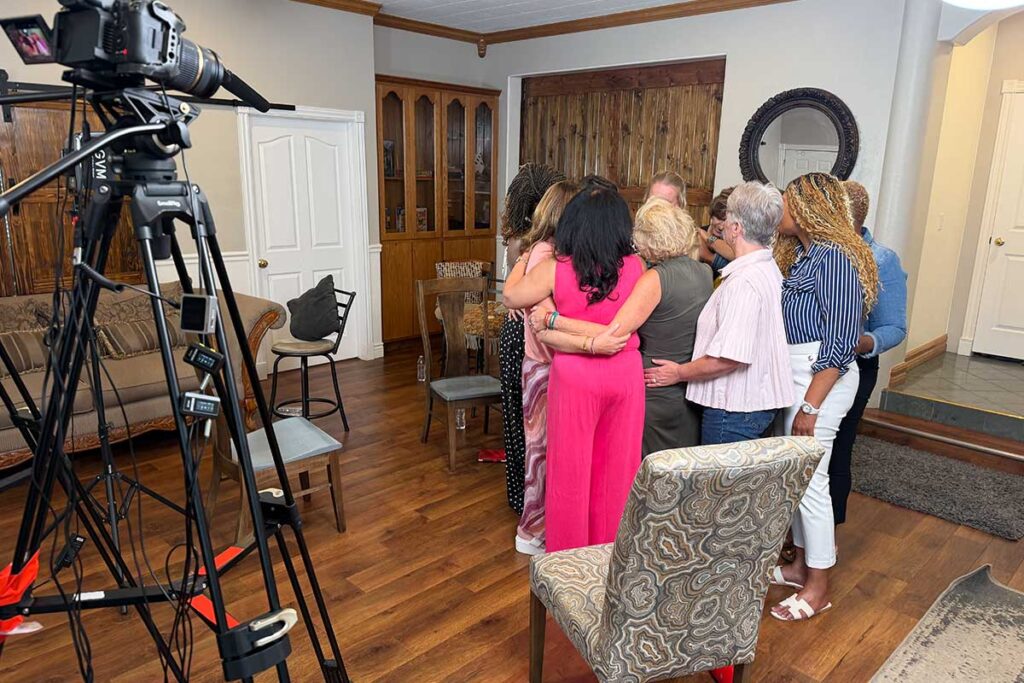
During 6 full days of filming, surrounded by trusted friends, sisters, and trained support staff, they sat down for the first time to view the Netflix documentary that told the story of the years they spent inside a polygamous sect led by self-proclaimed prophet Samuel Bateman. They have described the experience as grief for a life they never controlled, playing out in front of them on a screen. They knew what was happening behind every clip. Their mouth went dry, and their legs went stiff. At one point, watching a scene with the man who raised them, they found themselves thinking “we don’t even know that man.”
That kind of dissociation, watching your own trauma narrated back to you as entertainment, is jarring on its own. But Shandra and Marona’s account raises a harder question, one that reaches well past their individual story, and into the institutions that are supposed to protect children like them before a documentary crew ever shows up: how did this go on so long?
A Pattern the System Missed for Years
Samuel Bateman was not a stranger to law enforcement. He was a known offshoot of the Fundamentalist Church of Jesus Christ of Latter-day Saints (not to be confused with the Mainstream Church of Jesus Christ of Latter-day Saints), the same sect whose former leader, Warren Jeffs, was convicted in 2011 of sexually assaulting underage followers. When Bateman declared himself the next “prophet” around 2019, he began amassing what he called spiritual wives, more than twenty of them by 2022, at least ten of whom were minors, the youngest just nine years old. Investigators later confirmed that complaints about Bateman’s marriages to underage girls had reached authorities well before charges were filed, but were judged insufficient to act on at the time.
It wasn’t a task force or a routine welfare check that finally broke the case open. It was a bystander in Flagstaff, Arizona, who spotted small fingers reaching through the gaps of an unventilated cargo trailer Bateman was hauling down the highway in August 2022, and called it in. Inside were three girls, ages eleven to fourteen. That single tip, combined with years of undercover documentation by a cult-intervention specialist and her husband, who had spent time building trust inside the group, is what ultimately led to Bateman’s arrest, his 2024 guilty plea, and a 50-year federal sentence for conspiracy to transport minors for sexual abuse and to kidnap victims out of protective custody.
Put plainly, the people who exposed Bateman were not within the system, they were outsiders who did the system’s job for it, and a member of the public who happened to notice something wrong through a gap in a trailer door.
“How Often Are Girls Being Harmed and Pushed Aside?”
That’s the question Shandra and Marona keep returning to. Not just what happened to them, but what it says about everyone else who might still be inside a situation like it. In their own words, learning the full history of the community made them wonder how long the warning signs had been visible, and to how many people. Watching the finished documentary didn’t resolve that question for them, it just put it back to the forefront of the equation. They said the film was roughly ninety percent accurate to their memory, with names, timelines, and a few key details reshuffled, or wrong. What I learned during my interview with them and which is ultimately even more troubling to them is how much of what was accurate had been visible, in some form, for years.
Communities like Short Creek, the twin towns of Colorado City, Arizona, and Hildale, Utah, that anchored the FLDS for decades, present a specific and recurring problem for child-protection systems. Members are raised to distrust outside authority and to see those people, including police, teachers, and social workers, as instruments of persecution. Reporting abuse doesn’t just risk retaliation from a perpetrator, it risks excommunication from an entire family and community structure a person has never known life outside of. Nonprofits that eventually gained a foothold in Short Creek have described spending years just building enough trust to be let in the door, let alone to hear disclosures. That combination, theological loyalty, social isolation, and a justified fear of losing everyone you know, is exactly the kind of coercive control that outside investigators, healthcare workers, and educators are the least equipped to recognize during a routine encounter, and the most likely to misread as a family simply choosing a different lifestyle.
What Getting It Right Would Require
Shandra and Marona’s critiques aren’t aimed at any single officer or agency. It’s aimed at a pattern: reports that don’t get connected to each other, communities that are treated as too insular to intervene in until a crisis forces the issue, and a default assumption that girls who don’t come forward simply have nothing to disclose. Survivors and advocates who’ve studied high-control groups point to a few consistent gaps: welfare checks that rely on a child answering questions in front of the very adults controlling them, agencies that don’t share information across state lines even when a group is known to move between them, and a reluctance to treat coached, rehearsed-sounding answers as a red flag rather than a reassurance.
Closing those gaps doesn’t mean treating every insular religious community as a crime scene. It means training the people most likely to have first contact with a girl in a group like this, teachers, ER staff, home-visit caseworkers, even the officer running a routine traffic stop, to recognize coercion that doesn’t look like a bruise. It means building reporting channels that don’t require a child to burn down her entire support system, her family included, in a single disclosure. And it means taking a complaint seriously the first time it arrives, not the fifth.
Taking the Story Back
What makes Shandra and Marona’s current new projects different from the Netflix series isn’t just the camera angle, it’s consent. They signed the release forms themselves, they chose what to say and, just as often, what not to. A Way Out (current working title), the documentary they are now making on her own terms with executive producer, and director Sir David T. Fagan, and The Real Wives of Short Creek, the biography they helped Zehra Mahoon write about them, both start from a simple premise: if survivors don’t control their own stories, someone else will tell them, and that version usually comes with someone else’s agenda attached. Other producers and cast experts brought in to help the women in this community find a way through and find their way out include Angela Legh, Dr. Kelley Gurley, Isabel Donadio, Justine Reiss, Dr. Tina KooperSmith, Dr. DeAndrea Fleming, Dennis DiNoia, Leslie Latimore, Kelly Etter and Melanie Soloway.
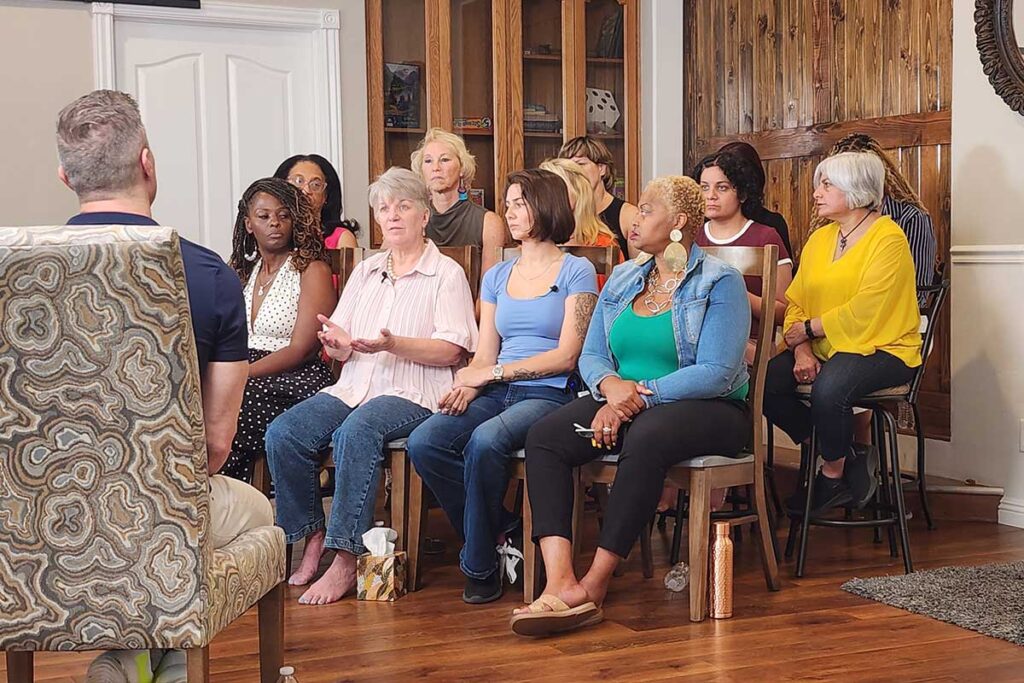
Shandra and Marona have described years of avoiding public life for fear of being asked questions they weren’t ready to answer, of feeling like their silence was itself a kind of self-inflicted harm. Reclaiming the narrative, for them, isn’t a branding exercise, it’s simply the first time they had a say in their own story at all.
But reclaiming a story after the fact doesn’t undo the years authorities had to intervene sooner and didn’t. Shandra and Marona’s accounts are a reminder that the girls now aging out of situations like theirs are not a closed case. They’re a standing question about who is watching, who is listening, and how many more complaints have to pile up on a desk before anyone decides they’re enough.

Véronique Lacroix is a writer, business owner, and ghostwriter helping other business owners bring their ideas, methods and genius into the world.
