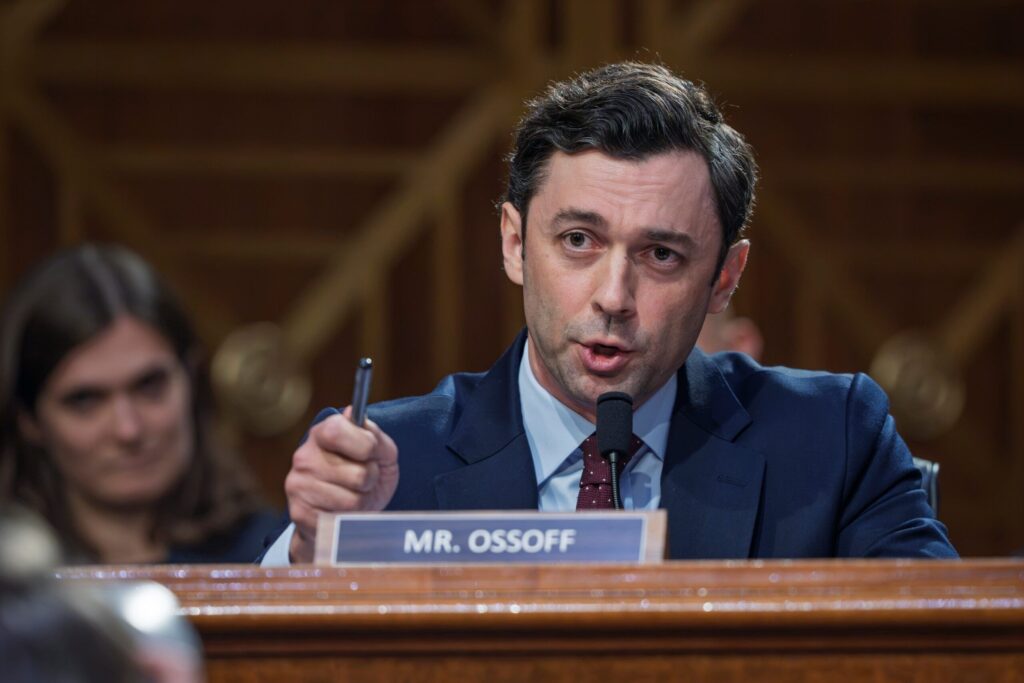
Political commentator Hasan Piker explains endorsement of El-Sayed for US Senate
Piker’s campus stops in support of Abdul El-Sayed this spring drew condemnation from critics—and El-Sayed’s opponents.
Political parties have a primary role to play in tackling online violence against women and gender diverse politicians. While the prevalence and impact of TFGBV, such as coordinated disinformation campaigns, deepfake image-based sexual abuse or trolling are well documented, many parties are still building their knowledge on how to respond effectively and have not put in place internal practices and policies that respond to the rapidly evolving, poorly regulated digital ecosystem. About the ReportIn order to promote and protect fair and democratic participation in politics, this ALIGN Report explores what political parties are doing in response to TFGBV and what factors shape their action. The findings, based on existing literature and interviews with gender and politics professionals, indicate there are three sets of factors which donors, civil society and practitioners should consider when designing action to support political parties to respond to TFGBV internally. These are: (1) gender norms; (2) socio-political environment; and (3) internal party factors.Key messagesUnequal gender norms are ubiquitous across politics, shaping expectations of leaders to be strong and assertive, and practices of political parties to uphold masculinist values and sustain cultures of silence. These often lead to weak response to TFGBV against women politicians.The socio-political context can incentivise or disincentivise action, depending on the salience of gender issues, which are increasingly weaponised. Electoral competitiveness, domestic laws (i.e. quota requirements), and even the political system or global normative frameworks influence political will to act.Internal party factors that shape responses will vary across countries and contexts, but include: structures to enforce codes of conduct, policies and reporting mechanisms on (TF)GBV, political ideology, extent of centralisation of leadership, and crucially the meaningful participation of women in decision-making positions, not least through internal women’s wings.Party responses can be seen as a spectrum, with actions falling between active discouragement to address TFGBV to commitment to transform unequal norms and practices within the party.About the ToolkitTogether with the report, this ALIGN toolkit offers gender professionals and others working on democratic strengthening a set of guiding questions and reflection prompts to identify which responses could be most effective and suitable in different contexts. These actions can complement other solutions to TFGBV, such as regulations promoting safety by design. The assessment spans a broad range of factors including: (1) different manifestations of gender norms, (2) the socio-political environment and (3) internal party structures.Key messagesPolitical parties are duty-bound to take action internally to respond to the significant threats posed to women members and candidates, including from their own party colleagues, affiliates and political peers.Existing party approaches to TFGBV can be assessed along a spectrum which ranges from active discouragement and passive acceptance to minimal response and transformative change.To generate effective and context-appropriate solutions to TFGBV, it is important to consider how gender norms shape leadership expectations and internal party practices, while also analysing the impact of the socio-political environment. While actions to support women to stay safe online are very common, codes of conduct and measures to strengthen women’s voice and power in the parties are proposed as most transformative solutions.
Black Americans serving in the U.S. military have long lived with a great contradiction. The country they’re fighting to protect is the same one that’s failed to serve and protect them.Despite this, Black Americans continue to enlist. There are over 350,000 Black active duty and select reserve members and more than 2.4 million Black veterans. That’s according to the Institute for Veterans and Military Families at Syracuse University.This year, Defense secretary Pete Hegseth has blocked or delayed the promotions of more than a dozen Black and female senior officers. He’s also dismissed several high-ranking Black and female officers, according to The Atlantic. This comes amid the second Trump administration’s aggressive rollback of programs and policies connected to diversity, equity and inclusion.Black military members have always battled discrimination. But for some, this is a step too far in the wrong direction. So, what does their future hold? And what does it mean for the U.S. military?Find more of our programs online. Listen to 1A sponsor-free by signing up for 1A+ at plus.npr.org/the1a.
The anti-establishment left surged. How shaken are party leaders?
Editorial: Muslims in the UK, Europe and the US are increasingly fearful and frustrated as targeted attacks rise. Others must speak out
Sen. Ruben Gallego defends campaign-funded Super Bowl and Miami trips as legitimate fundraising efforts after scrutiny of his leadership PAC spending.
In today’s edition of The Tea, Spilled by Morning Joe: Joe on the results of yesterday’s primaries, the fourth anniversary of Roe v. Wade being overturned, and more.
If you’re reading this, you probably know the value of the Mercury’s news reporting, arts and culture coverage, event calendar, and the bevy of events we host throughout the year. The work we do helps our city shine, but we can’t do it without your support. If you believe Portland benefits from smart, local journalism […]
Jeff Crank points to a framed photo hanging in his office, signed by his boss at the time. “Great baby! Great name! Great family!” wrote then-Rep. Joel Hefley in silver ink. In the photo, Hefley is holding Crank’s son — also named Joel — in front of the Capitol. He wasn’t named entirely after the […]