
INTERVIEW: Political expert weighs in on SC redistricting debate
A local political expert is weighing in on the latest developments in South Carolina’s ongoing redistricting debate.

A local political expert is weighing in on the latest developments in South Carolina’s ongoing redistricting debate.

Former Senator Bernie Kenny of Hoboken in this fourth and final edition of Politics, Pubs, Parades, + the Parish ties together Irish heritage
Willie J. Thompson, Jr., coordinator of Benedict College’s Interdisciplinary Studies department, sat down with WIS to explain the latest developments on redistricting in South Carolina.
Willie J. Thompson, Jr., coordinator of Benedict College’s Interdisciplinary Studies department, sat down with WIS to explain the latest developments on redistricting in South Carolina.
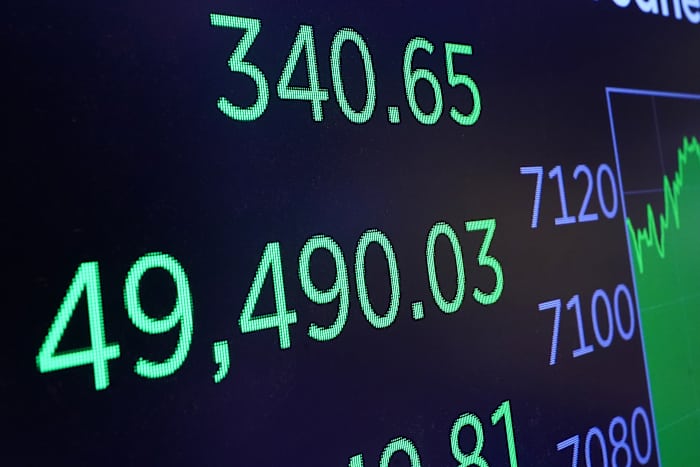
Democrats are increasingly critiquing each other over their personal stock trades as the party looks to hone its anti-corruption message against President Donald Trump in the midterm elections.

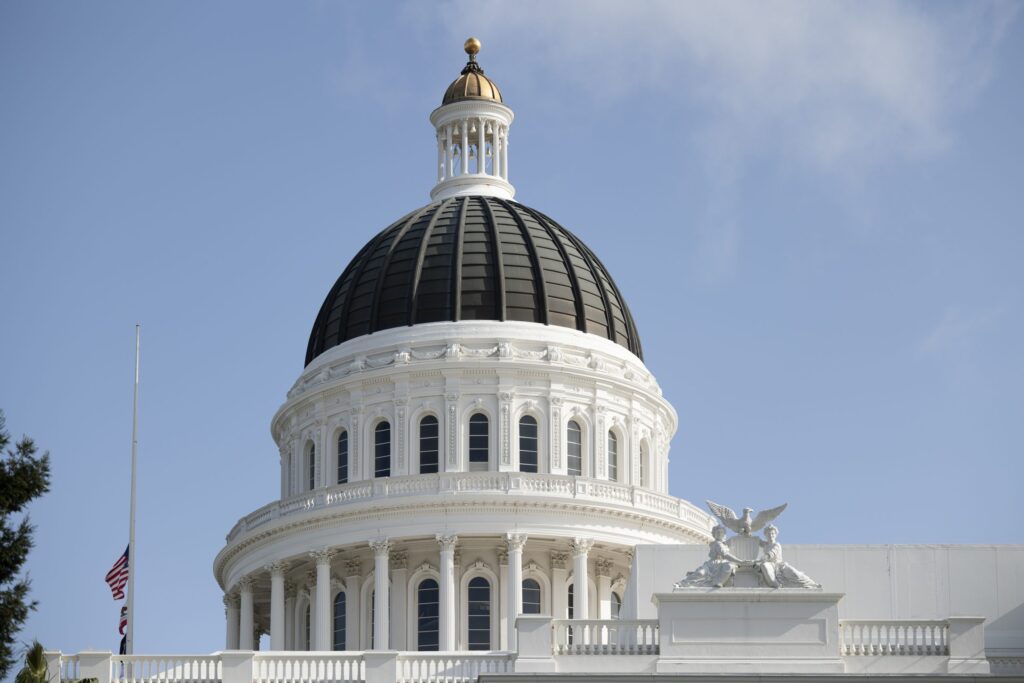
The Board of Equalization has very little power, but it’s a launching pad to statewide political office in California.

Thank you for opening your Chartbook email.
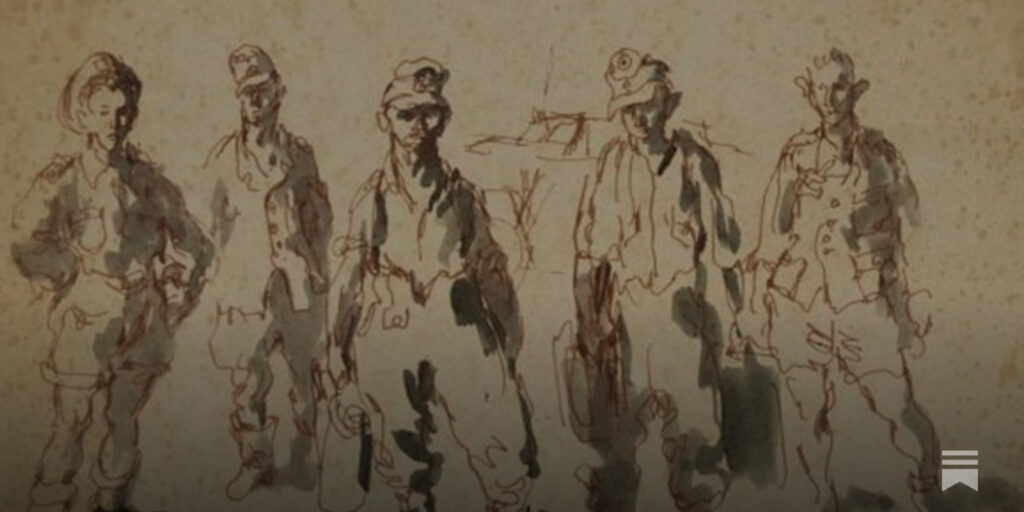
Feliks Topolski, 1907-1989 8th Army’s Front, Italy 1944
Semiconductor decoupling
Source: FT
One thing that Jerome Powell deeply understood is that chairing the Fed under current conditions is a deeply political job.
“Powell has successes and mistakes to his name. But he stands out as having thought more carefully about the Fed’s democratic legitimacy than any chair since Paul Volcker,” said Paul Tucker, a former deputy governor at the Bank of England, referring to the Fed chair who successfully fought the great inflation of the 1970s and early 1980s. …
While Powell was at the Treasury in the early 1990s, he watched Alan Greenspan build relationships within the government. That convinced Powell he needed to follow the former Fed chair’s lead and spend more time in Congress than his predecessors Yellen and Bernanke. “The accountability for the Fed runs through Congress,” said Claudia Sahm, a former Fed official who is now chief economist at New Century Advisors. “That’s not just about having people on speed dial — it’s answering questions, explaining policy and getting feedback.”
Source: FT
Ethiopia’s PM Abiy and Nigerian business tycoon, with Chinese engineering, are driving industrialization in Ogaden/Somali region of Ethiopia. – Michael Masri’s reporting for Africa Report if fascinating.
Ethiopia has launched a cluster of large industrial schemes in the Somali region, laying foundation stones for a urea plant and an oil refinery in Gode while opening the first two phases of the Ogaden LNG project. Abiy Ahmed framed the push as part of a broader strategy to link energy, agriculture and industry. “These projects embody more than industrial growth,” he said. “They represent our shared responsibility to harness opportunities, strengthen co-operation and promote peace.” The Gode urea plant, backed by Dangote Group and Ethiopian Investment Holdings (EIH), is designed for 3m tonnes a year. Dangote owns 60%, while EIH holds 40%.
Officials say Dangote’s equity totals about $2.5bn, while the state provides land and implementation oversight. Gas from the Calub fields will be piped 108km to the site. Construction is slated for 40 months, with operations targeted for 2028. Ethiopia imports most of its fertiliser, spending more than $1.2bn a year for 1.5m–2m tonnes. Usage was roughly 1.7m tonnes in 2023, almost half of it urea, and demand for 2024–25 is put above 2.4m tonnes. If delivered on time, the Gode plant could cover domestic needs and allow exports to neighbours.
Brook Taye, chief executive of EIH, called the venture “a significant milestone in the journey toward industrial self-sufficiency”. Dangote told the groundbreaking crowd that the complex would be integrated with gas supply and a polypropylene unit to support local inputs. He pointed to Ethiopia’s Grand Ethiopian Renaissance Dam (GERD), with a capacity of more than 5,000MW, and noted his group’s cement operations and expansion plans.
The Gode refinery is being developed by Golden Concord Group of China. It is designed to process 3.5m tonnes a year of crude and condensate from the Hilala field, with associated storage. Backers say it will ease foreign-exchange pressure from fuel imports and anchor further industrial activity, including a proposed steel smelting site in Dire Dawa. GCL’s chair, Zhu Gongshan, cast the project as “a key step in Ethiopia’s path to energy sovereignty”, underscoring the Beijing–Addis ties. Financing details are still being finalised, but the refinery is central to the government’s energy-security narrative.
Source: The Africa Report
Dangote’s Ethiopian vision:
Dangote began with cement. His crown jewel, Dangote Cement, dominates Nigeria’s market and has 10 operations in other nations in Africa. The formula has been consistent: identify sectors with chronic shortages – cement, fertiliser, sugar – commit massive local investments, and scale up to serve regional demand. Ethiopia was a natural extension of that model. In 2015, Dangote launched the Mugher Cement Plant outside Addis Ababa at a cost of $600m, with an annual capacity of 2.5 million tonnes. The investment gave him a firm foothold in one of Africa’s fastest-growing construction markets.
But success came with risks. In May 2018, violent unrest led to the killing of Dangote’s country manager and temporary shutdowns at Mugher. While other investors might have retreated, Dangote doubled down. Today, he is preparing to spend $400m to expand Mugher’s capacity to 5 million tonnes, alongside a new grinding unit near Addis Ababa. Cement is just one market Dangote is targeting. Ethiopia’s enormous state-controlled sugar industry, long plagued by inefficiency and debt, has struggled for years to reform. Its Omo Kuraz Sugar Development Project, touted as one of the continent’s largest initiatives, continues to face delays and mismanagement. …
The most ambitious venture of all is the planned fertiliser production complex in Gode, Somali region. Publicised on 28 August 2025, the Dangote Group and Ethiopian Investment Holdings (EIH) deal plans one of the world’s largest single-site urea manufacturing plants. The project costs an estimated $2.5bn and has an estimated capacity of 3 million metric tonnes annually, a rate that would not only render Ethiopia independent, but even a net exporter of fertiliser. EIH, the state wealth fund of Ethiopia, will hold 40%, while 60% is held by Dangote Group. …
For Dangote, Ethiopia is a trifecta: Cement demand is projected to grow by 10% annually, its sugar consumption is growing with rapid urbanisation, and fertiliser demand is all but insatiable, given that farming supports the livelihood of 70% of Ethiopians.
Source: The Africa Report
The stakes for Abiy are high:
For Addis Ababa, the $4bn fertiliser project in Ethiopia’s Somali region is no longer simply a manufacturing investment. It is increasingly being framed as a strategic state project tied to food sovereignty, import substitution and the government’s broader attempt to build economic resilience under mounting fiscal pressure. “Becoming self-sufficient in food is our main agenda,” Abiy says during the visit. “Land is needed; we have it. Water is needed; we have it. Human resources are needed; we have it.” The scale is enormous even by African industrial standards.
Once operational, the plant is expected to produce three million metric tonnes of urea annually, potentially making it one of the continent’s largest fertiliser complexes. Ethiopian officials say the project now includes a 110km gas pipeline, a 120MW power plant, a polypropylene packaging facility and a two-million-tonne NPK blending plant.
For a government grappling with chronic foreign exchange shortages, ballooning import bills and pressure on agricultural productivity, the numbers matter politically as much as they do economically. The decision to anchor the project in Gode is deliberate. Long viewed as peripheral to Ethiopia’s industrial economy, the Somali region is now being repositioned by the federal government as a future irrigation and agro-industrial corridor. Officials argue that the area’s vast land reserves and access to water could eventually support large-scale commercial farming capable of reshaping Ethiopia’s food economy.
The government is simultaneously building housing infrastructure for about 5,000 residents near the plant, while officials project broader industrial expansion along the corridor. Abiy goes further, comparing the long-term revenue potential of the Gode development zone with Ethiopia’s flagship state enterprise. “The investments we are making in this Gode area, combined, will generate high revenue for Ethiopia, at par with Ethiopian Airlines,” he says.
Source: The Africa Report
Feliks Topolski 1907-1982
Topolski’s Chronicle, ‘Nazi Revival’, Vol. 8, Is. 1-2, 1960
HEY READERS,
THANK YOU for opening the Chartbook email. I hope it brightens your day.
I enjoy putting out the newsletter, but tbh, what keeps this flow going is the generosity of those readers who clicked the subscription button.
Photo by Jakub Dziubak on Unsplash
If you are persuaded to click, please consider the annual subscription of $50. It is both better value for you and a much better deal for me, as it involves only one credit card charge. Why feed the payments companies if we don’t have to.
Subscribe
Grim vision of drone warfare by Sylvie Kaufmann
For contributing subscribers only.
Subscribe
The state of the art in Colbert-studies.
Jean-Baptiste Colbert was Louis XIV chief minister from 1661 to 1683 and traditionally seen as an architect of absolutism and mercantilism. Alexander Hamilton later cited him as an inspiration in 1782. Now his legacy is disputed. Daniel Dessert, the chief critic, sees Colbert as the orchestrator not so much of an absolutist state as of an elite cabal.
Would be great to have a good English-language review of this important debate.
Source: lhistoire
Didn’t know that the Magna Carta included free trade provisions
Fighting for the right to the beach in Oregon in 1967:
Source: Research Gate
RAF Station – British and Polish Flags, c. 1940-45, The Ingram Collection Feliks Topolski, 1907-1989
ink and wash
If you’ve scrolled this far, you know you want to click:
Subscribe
Turkish stocks and the lira stabilised, while the country’s international bonds nudged higher on Monday, after last week’s sharp swings triggered by a court ruling targeting the main opposition leadership.
Thank you for your support of Chartbook. Your generosity keeps this show on the road.
Feliks Topolski, 1907-1989 8th Army’s Front, Italy 1944
Semiconductor decoupling
