
In an era defined by instant communication and hyper-networked relationships, the traditional press kit, a carefully curated folder of press releases, biographies, and glossy photos, can feel like an artifact from another era. For publicists, marketers, and business leaders with established, direct connections to influential journalists at major publications, the argument for bypassing these formalities is compelling. Why funnel information through an impersonal, one-size-fits-all document when you can pick up the phone, send a direct message, or craft a personalized pitch to an editor you have known for years?

This direct-access advantage suggests that the classic press kit and press release are not just inefficient, but increasingly irrelevant. Yet the deeper issue is not convenience. It is structural. Press kits and traditional press releases were designed for a media environment built on centralized editorial control and limited distribution. Those conditions have permanently shifted.

The Original Purpose of the Press Kit and Why It Falters
The primary function of a press kit was to serve as a standardized information packet, making key details easily accessible for media professionals unfamiliar with a person, company, or event. It supported discovery. It reduced friction. It created uniformity.
But its value diminishes once discovery is no longer the primary hurdle. If a fashion editor already knows your designer client and trusts their work, a boilerplate biography adds little. If a technology reporter has your CEO on speed dial for commentary, a formal release announcing a minor update feels unnecessary. The relationship becomes the conduit.
At the same time, the broader media environment has transformed. Distribution is now unlimited. News cycles are fragmented. Attention is shaped by algorithms rather than editors alone. In this environment, distribution without narrative control produces noise. Mass release strategies may generate brief visibility, but they rarely create durable authority.
In 2026, visibility is abundant. Authority is scarce.
It was this structural shift that led me to create a report titled The Extinction of Press Kits and Press Releases: How to Get Featured Faster in 2026 with Real Media Outlets and High-Visibility Events. In it, I outline why traditional publicity models are declining and what replaces them: a framework I call Strategic Authority Placement.
Exposure scales linearly. Authority compounds.
That distinction is subtle, but it changes how media strategy must be approached.
Speed, Trust, and the Modern News Cycle
This shift saves more than paper and production time. It saves relevance. Crafting, approving, and distributing a polished press kit is a resource-intensive process involving multiple stakeholders. In a fast-moving news cycle, days spent refining a release can mean missing the story altogether.
A direct, conversational pitch to a trusted contact, supported by concise context and the right assets, is often far more agile. It respects the journalist’s time and leverages existing trust to accelerate editorial momentum.
But speed alone does not equal strategy. Many leaders still operate within an exposure mindset. They secure a feature, experience a spike in attention, and move on to the next announcement. What often goes unexamined is whether that coverage builds lasting positioning.
If media efforts result in temporary visibility, minimal indexed presence, and limited credibility transfer, the approach remains transactional. Strategic authority requires a different lens.
Publicity should be viewed as a capital allocation decision. The question is not simply whether coverage can be obtained, but whether that coverage strengthens long-term positioning, discoverability, and institutional credibility.
Inbox Saturation and the Power of Personal Signals
Modern newsrooms reflect this evolution. Journalists receive hundreds of impersonal press releases each day. Most are filtered, ignored, or deleted. Generic outreach blends into background noise.
In that environment, personal connection becomes a signal amplifier. A direct message stands out because it is contextual and intentional. For the reporter, a tip from a trusted source carries inherent vetting.
Yet relationships alone are not sufficient. They must be embedded within a broader authority strategy. Coverage secured through connection should be evaluated for its structural impact. Does it create an asset that continues to reinforce credibility over time? Does it position the subject within a respected editorial ecosystem? Does it strengthen the narrative architecture around that individual or brand?
When media is treated as infrastructure rather than momentary exposure, its value compounds.
Is the Press Kit Obsolete, or Simply Repositioned?
Does this mean the press kit disappears entirely? Not quite. It still serves as supporting collateral for emerging brands or as a centralized digital resource for background research. A well-organized online newsroom can provide verified facts, quality assets, and historical context.
But it is no longer the engine of modern publicity strategy. It supports positioning. It does not create authority on its own.
What replaces it is not improvisation, but intentional design. Strategic Authority Placement focuses on embedding leaders within credible editorial environments where authority is transferred and reinforced. It prioritizes evergreen features over fleeting announcements and strategic alignment over volume distribution.
This is the strategic lens through which we advise our clients. Rather than chasing exposure, we focus on engineering authority assets that continue to strengthen positioning long after publication. That shift in thinking is what creates a meaningful advantage.
Relationships as the New Media Currency
Context and relationship still matter deeply. A genuine connection with a journalist remains more valuable than the most elaborate press kit. It moves communication from transactional information-sharing to collaborative storytelling.
But in today’s environment, relationships must be paired with strategic architecture. Media functions in one of two ways. It functions as exposure, or it functions as infrastructure. Traditional publicity generates attention. Strategic authority positioning builds equity.
Leaders who understand this distinction do not measure success solely by placement volume. They measure it by positioning impact. They align their narratives with institutional relevance. They choose platforms that confer credibility. They ensure that visibility reinforces long-term strategic objectives.
Coverage is no longer something to be chased impulsively. It is something to be architected deliberately. The press kit may remain as background support, but its era as the centerpiece of publicity strategy has passed. In a world saturated with content, competitive advantage belongs not to those who distribute the most information, but to those who design authority with intention.
Visibility fades. Authority endures.
To learn more, check out davidtfagan.com

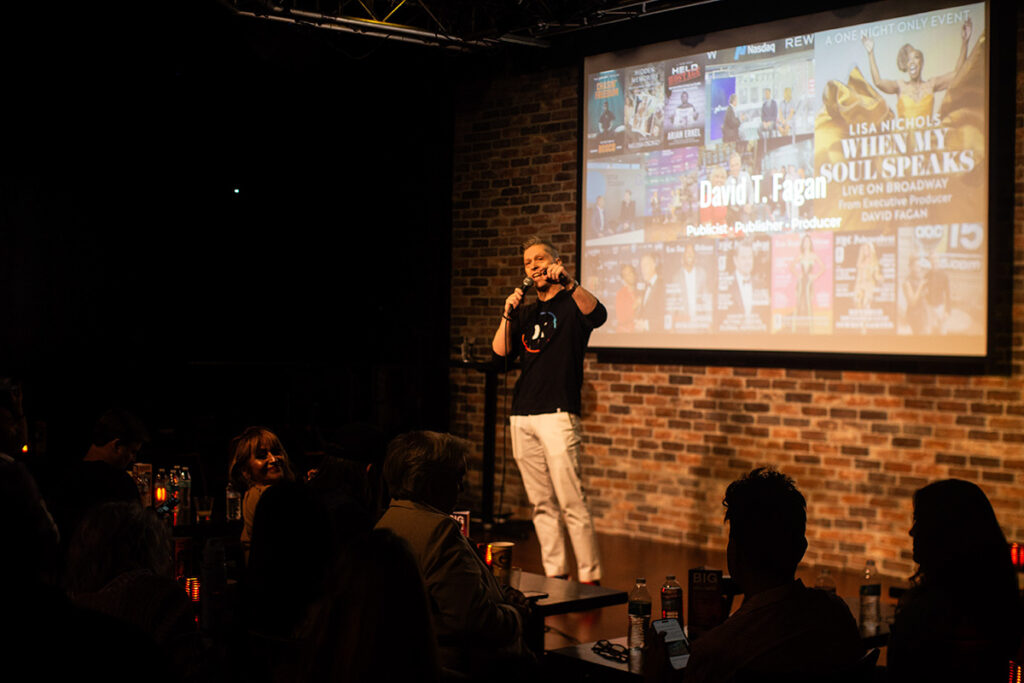
Sir David T. Fagan, President of Top Talent Agency is a media-celebrated producer, publisher and publicist. As a syndicated columnist he continually shares inspiring and actionable content.
